Would you like to switch to the accessible version of this site?

Go to accessible site Close modal window

Don't need the accessible version of this site?

Hide the accessibility button Close modal window
Accessibility View Close toolbar
Premier VetCare

Connect With Us

13197 Old Nashville Hwy

Smyrna, TN 37167 US

615-459-0802

Open mobile navigation
  • Home
  • Online Forms
    • Client Registration
    • Pet Registration
    • Puppy Wellness Check-In
    • Kitten Wellness Check-In
    • Adult Wellness Check-In
    • Senior Wellness Check-In
    • Surgical Check-In Forms
    • Feline Low Cost Spay & Neuter Registration
    • Glucose Curve
  • New Patient & Policy Center
    • Premier Referral Rewards
    • Virtual Office Tour
    • Payment Options
    • What to Expect
    • Medical Records Request
    • Prescription Policy
    • Exam Booking Fees
    • Urgent Care & Walk-Ins
    • Driver License Policy
    • Nail Trim Policy
  • About Us
    • Services
    • Meet Our Veterinarians
  • Premier Pets
    • What Are Premier Pets?
    • Canine Low Cost Spay & Neuter
    • Feline Low Cost Spay & Neuter
    • Dental Health Clinic
    • PET CARE BASICS
    • Senior Pet Wellness
    • ProHeart
  • Shop Online
    • Premier Recommendations
  • Schedule Appointment
  • Boarding & Grooming
  • Veterinary Topics
    • Pet Health
      • Chronic Conditions
      • Digestive and Oral Health
      • Diseases and Viruses
      • Pests and Parasites
      • Orthopedics
    • Today's Veterinarian
    • Choosing Your Pet
      • Finding Your Pet
      • Cats
      • Dogs
      • Exotics
        • Amphibians
        • Birds
        • Reptiles
          • Lizards
          • Turtles
      • Small Mammals
        • Ferrets
        • Rabbits
        • Domesticated Animals
          • Prairie Dogs
        • Pocket Pets
          • Chinchillas
          • Guinea Pigs
          • Hamsters
          • Hedgehogs
          • Rats
      • Livestock
        • Cows
        • Donkeys, Horses & Mules
        • Goats
        • Pigs
        • Poultry
        • Sheep
    • Living With Your Pet
      • Bringing Your Pet Home
      • Children and Pets
      • Providing Care
      • Travel
      • Saying Goodbye
    • Newsletter Library
      • Cats
      • Tips for Pet Owners
      • Behavior & Training
      • Fleas & Parasites
      • Keeping Pets Healthy
      • Recognizing Illness
      • Nutrition & Food
      • Pet Dangers
      • Seasonal Topics
      • Visiting the Vet
      • Equine
      • Newsletter Archive
        • Fun with Pets
        • Unbelievable Pets
    • Video Newsroom
      • Health Topics
      • Technology and Science
      • Other Interests
    • Newsletter Library
    • Client Survey
    • Pets4Kids
  • Contact Us
  • Employment Opportunities
  • Home >
  • Articles >
  • Newsletter Library >
  • Keeping Pets Healthy >
  • Your Big Dog May Be More Likely to Develop These Health Problems

Your Big Dog May Be More Likely to Develop These Health Problems

  • Created in Newsletter Library, Keeping Pets Healthy
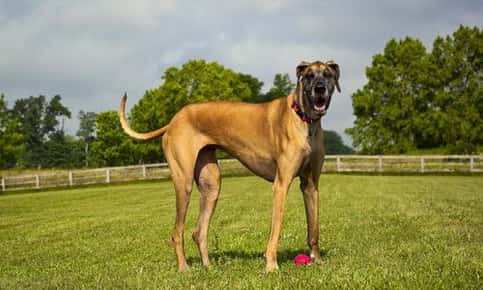
great dane

Your Big Dog May Be More Likely to Develop These Health Problems

Are you familiar with the health conditions common in big dogs? Your large breed dog may be at increased risk of developing one or more of these conditions.

Hip and Elbow Dysplasia

Hip and elbow dysplasia occur due to malformations in the hip or elbow joints. As a result, the bones don't move smoothly in the joints and, instead, grind or rub together painfully. The condition may eventually cause arthritis, joint degeneration and inflammation, lameness, and difficulty climbing stairs or jumping. Dysplasia is often inherited and can cause symptoms early in your pet's life. Hip dysplasia is common in German Shepherds, Bernese Mountain Dogs, Labrador Retrievers, Great Danes, St. Bernards, and other large dogs, while elbow dysplasia is often seen in Golden and Labrador Retrievers, German Shepherds, and Rottweilers.

Maintaining a healthy weight is particularly important for dogs who have hip dysplasia. Even a few extra pounds can increase pressure on the joints and worsen your pet's symptoms. Although pain medications and joint supplements might improve your pet's comfort, surgery may be needed in some cases. Surgical procedures are used to reposition or deepen joint sockets in young dogs with hip dysplasia, while total hip replacement surgery is the best option for older dogs. Dogs that have elbow dysplasia may also benefit from surgery.

Bloat

Bloat, or gastric torsion, happens when your dog's stomach stretches, then twists or rotates. The life-threatening condition can prevent blood from reaching the stomach or other parts of the body and may cause tears in the walls of the stomach. If your dog doesn't receive immediate veterinary treatment, he or she may die.

Big dogs may be more likely to develop bloat if they eat too quickly and swallow air as they eat. The swallowed air can build up in the stomach, causing it to dilate. Bloat symptoms include swollen stomach, drooling, anxiety, pacing, inability to vomit, shortness of breath and rapid heartbeat. Your pet's veterinarian can decrease pressure in the stomach by inserting a tube into the stomach or puncturing it with a needle if the tube won't fit due to twisting. Surgery will restore the normal position of the stomach if it has twisted.

Heart Problems

Dilated cardiomyopathy affects a variety of large dog breeds, including Great Danes, St. Bernards, Newfoundlands, Afghan Hounds, and Doberman Pinschers. The condition makes it difficult for the heart to pump blood efficiently and increases the size of the organ. Symptoms of dilated cardiomyopathy include coughing, rapid breathing, weakness, fatigue and fainting. Although there is no way to improve the condition of the heart, medications may help control irregular rhythms and delay the progression of the disease or the development of congestive heart failure.

Large dogs may also be more likely to develop aortic stenosis, a condition that restricts blood flow to the heart due to a narrowing along the aorta. If your dog's condition is mild, there may be no obvious signs. In fact, the condition may only be discovered if your pet's veterinarian hears a heart murmur during an exam. Dogs that are more severely affected may have trouble breathing, breathe rapidly or faint. Heart medications can be helpful for some dogs. In severe cases, cardiac catheterization may be recommended to widen narrowed areas.

Eyelid Conditions

Entropion and ectropion can affect the eyelids of big dogs, causing pain and irritation. Entropion occurs when the eyelids roll inward, while ectropion causes the lids to roll outward. Eyedrops and ointments that protect the sensitive tissues of the corneas and the lining of the eyes can be helpful if your pet has a mild form of either condition. Surgery may be recommended for severe cases.

Regular veterinary care helps you safeguard your big dog's health. If you're concerned about a health issue, or it's time for your furry friend's checkup, give us a call to schedule an appointment.

Sources:

PetMD: 10 Most Common Issues for Giant Dogs

https://www.petmd.com/dog/slideshows/breeds/10-most-common-health-issues-giant-dogs

American Kennel Club: Hip Dysplasia in Dogs

https://www.akc.org/expert-advice/health/common-conditions/hip-dysplasia-in-dogs/

American College of Veterinary Surgeons: Canine Elbow Dysplasia

https://www.acvs.org/small-animal/canine-elbow-dysplasia

  • Pet Health
    • Chronic Conditions
    • Digestive and Oral Health
    • Diseases and Viruses
    • Pests and Parasites
    • Orthopedics
  • Today's Veterinarian
  • Choosing Your Pet
    • Finding Your Pet
    • Cats
    • Dogs
    • Exotics
      • Amphibians
      • Birds
      • Reptiles
        • Lizards
        • Turtles
    • Small Mammals
      • Ferrets
      • Rabbits
      • Domesticated Animals
        • Prairie Dogs
      • Pocket Pets
        • Chinchillas
        • Guinea Pigs
        • Hamsters
        • Hedgehogs
        • Rats
    • Livestock
      • Cows
      • Donkeys, Horses & Mules
      • Goats
      • Pigs
      • Poultry
      • Sheep
  • Living With Your Pet
    • Bringing Your Pet Home
    • Children and Pets
    • Providing Care
    • Travel
    • Saying Goodbye
  • Newsletter Library
    • Cats
    • Tips for Pet Owners
    • Behavior & Training
    • Fleas & Parasites
    • Keeping Pets Healthy
    • Recognizing Illness
    • Nutrition & Food
    • Pet Dangers
    • Seasonal Topics
    • Visiting the Vet
    • Equine
    • Newsletter Archive
      • Fun with Pets
      • Unbelievable Pets
  • Video Newsroom
    • Health Topics
    • Technology and Science
    • Other Interests
  • Newsletter Library
  • Client Survey
  • Pets4Kids

Free Heartworm Test With Proheart Injection

Complete Form Below For Details

Error!

    Featured Links

    Click to find out more

    • Online Forms

      Our patient forms are available online so they can be completed in the convenience of your own home or office.
    • Wellness Pricing

      Pricing for our most Common requested services.
    • Make An Appointment

      We will do our best to accommodate your busy schedule. Schedule an appointment today!

    Office Hours

    Our Regular Schedule

    Monday:

    7:30 am

    5:30 pm

    Walk-Ins & Urgent Care 8 am - 4 pm

    Tuesday:

    7:30 am

    5:30 pm

    Walk-Ins & Urgent Care 8 am - 4 pm

    Wednesday:

    7:30 am

    5:30 pm

    Walk-Ins & Urgent Care 8 am - 4 pm

    Thursday:

    7:30 am

    5:30 pm

    Walk-Ins & Urgent Care 8 am - 4 pm

    Friday:

    7:30 am

    5:30 pm

    Walk-Ins & Urgent Care 8 am - 4 pm

    Saturday:

    Closed

    Closed

    Sunday:

    Closed

    Closed

    Location

    Find us on the map

    Featured Articles

    Read about interesting topics

    • March Newsletter: How to Keep Your Cat Safe When Outdoors

      Wondering how your cat can safely spend time outdoors? ...

      Read More
    • March Newsletter: How to Choose Safe Blankets for Pets

      Do you know how to pick a safe blanket for your pet? ...

      Read More
    • February Newsletter: How to Reduce Dental Anxiety in Pets

      Does your pet hate toothbrushing? These tips could reduce dental anxiety. ...

      Read More
    • February Newsletter: How to Safely Change Your Cat’s Food

      Buying a new food for your cat? Find out how to switch foods safely. ...

      Read More
    • January Newsletter: Signs Your Pet Needs a Wellness Exam

      Does your pet need a wellness exam? ...

      Read More
    • January Newsletter: How Your Veterinarian Can Help If Your Pet Ingests Something Toxic

      Has your pet eaten something it shouldn't have? Find out how your vet can help. ...

      Read More
    • December Newsletter: Signs Your Pet Needs a Professional Cleaning

      Do you know when your pet needs a professional cleaning? ...

      Read More
    • December Newsletter: Simple Ways to Keep Your Home Flea-Free for Your Pet’s Well-being

      Never want to see another flea again? Try these tips for a flea-free home. ...

      Read More
    • November Newsletter: The Importance of Bloodwork for Your Pet’s Health

      Wondering if your pet really needs bloodwork? Find out the benefits of blood tests for your furry friend. ...

      Read More
    • November Newsletter: Turkey Day Tips for Pet Owners

      Don't forget about your pet when making Turkey Day preparations. ...

      Read More

    NEWSLETTER SIGNUP

    Sign up for more articles

    Error!

      Connect With Us

      • Copyright © 2026 MH Sub I, LLC dba iMatrix.
      • Admin Log In
      • Site Map